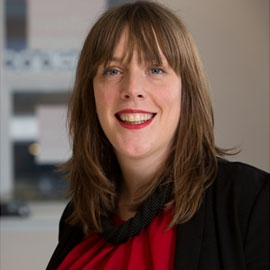
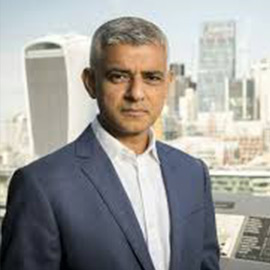
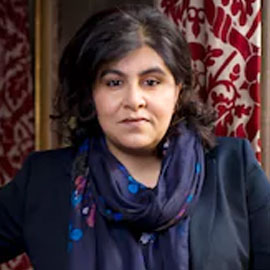
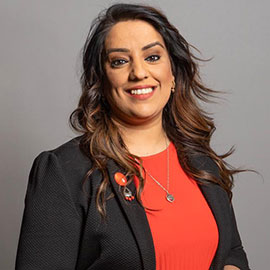
Role models are a powerful way of raising aspirations of both women and girls to realise their potential. We have tried to do this through:
• Mobile Exhibitions - A number of mobile exhibitions were developed in 2010/11 highlighting Muslim female role models from diverse sectors. These included: sportswomen, pioneering women, women in history, Muslim women from across the UK and Birmingham women. These are being shown at events, schools, universities and libraries.
• Posters - A pack of 12 posters was developed in 2010/11 to highlight Muslim female role models in Birmingham which was sent to secondary schools and colleges.
• Booklet - A role models booklet profiling Muslim female role models from in Birmingham was developed in 201/11. The booklets which highlighted more than 30 women was sent to schools, libraries and careers offices.
It is important to provide training either to Muslim women or those who work and engage with them on issues that affect them. Workshops we have organized include:
• Gender Islam and Advocacy – In March 2008, we conducted a 5 day training workshop in collaboration with international experts to empower Muslim women by exploring the principles of equality and justice. The workshop was held in March 2008 in Leicester and attended by women from around the UK. Funding was received from Department of Communities and Local Government through our partner organisation, Fatima Women’s Network therefore not shown on current accounts.
• Forced Marriage – In December 2010, we organized a national workshop in partnership with Practical Solutions and West Midlands Fire Service on forced marriage which was delivered to front line professionals.
• Understanding Parliament – In May 2011, in partnership with Parliamentary Outreach and the University of Warwick (and in part sponsored by Economic Social Research Council), a national workshop was held to help Muslim women to understand how parliament works and how they can influence decision making.
Model Muslim Marriage Contract Initiative
For several years, MWNUK has been collaborating with the Muslim Institute and progressive scholars to develop and promote a model Muslim Marriage Contract for those entering religious marriages in the UK, while also taking part in a campaign to promote civil marriage among British Muslims. In 2010, the MWNUK Chair has taken the lead role in developing a website dedicated to promoting the model contract and civil marriage, which was launched at the end of 2010. The website (www.muslimmarriagecontract.org) contains information about Muslim family laws and women’s rights in other countries; classical Muslim jurisprudence and Sharia; and civil marriage. The MWNUK Chair is also part of a high-level discussion group organised by Stephen Hockman QC seeking to develop consensus recommendations from within the Muslim community to Government regarding Muslim marriages.
Safeguarding Muslim Children
MWNUK are a member of the NSPCC National Muslim Advisory Group that meet to provide input on safeguarding Muslim children. We were involved in helping shape the first national NSPCC conference on Safeguarding of Muslim children which was held in London on 17th March 2011 and aimed at front line professionals working with Muslim communities. Shaista Gohir, Executive Director of MWNUK facilitated the workshop on ‘cultural practices that can amount to child abuse.’ We are continuing with our partnership working with the NSPCC and now exploring ways of raising awareness amongst Muslim communities of child sexual abuse.
Engagement with Policymakers
We have responded to and participated in government consultations which have included written feedback and roundtable discussions. Issues that MWNUK have responded included forced marriages, preventing violent extremism, female genital mutilation, and civic engagement. Government Departments that MWNUK have engaged with include the Home Office, Foreign Commonwealth Office, Communities and Local Government, Ministry of Justice and Government Equalities Office. We elicit the views of Muslim women and those working with them on various issues to inform our approach and thinking and to be able to channel them to government so they can be considered in policy making.
Some examples of consultations have included: National Listening Exercise One of our first activities was, with the collaboration of the Women’s National Commission, was to ask Muslim women about their needs. A national listening exercise was carried out in 2005 across five cities which included: Leicester, Birmingham, London, Manchester and Bradford. More than 200 Muslim women participated in workshops which resulted in the report She Who Disputes, which identified both the exciting space for and unjust barriers to Muslim women’s full participation in society. This analysis remains the main inspiration for our work, in addition to the on-going interaction of our members with women in the community. Our work is about changing the foundations of Muslim women’s lives and not just improving services. Click here to view report.
Equality Bill In August 2007, MWNUK responded to the Government’s consultation on the introduction of a Single Equality Act and the extension of the public sector duty to promote equality to other grounds such as religion. Click here to view report.
Health Workshop We facilitated two workshops focussing on barriers to healthcare faced by Muslim women. The workshops were held in January 2008 in Bolton and Blackburn. A copy of the report submitted to the Department of Health is available on our website. Click here to view report.
Preventing Violent Extremism In September 2009, MWNUK submitted a report to the parliamentary select committee inquiry on the Preventing Violent Extremism programme after consulting our members. In August 2010, we hosted a meeting in Birmingham and facilitated a discussion between Muslim women and representatives from the Home Office where women could raise concerns about the preventing violent extremism agenda. This meeting gave Muslim women an opportunity to input their views directly to government to influence and shape new policies in this area of work. Click here to view report.
Roundtable with Government Equality Office The Women’s National Commission (WNC) was closed by government on 31st December 2010 to cut costs. As a result, some of the functions currently undertaken by the WNC will be delivered centrally through the Government Equalities Office (GEO) and the Department prepared a consultation exercise to engage with women across the UK over the coming months. Rather than wait to be consulted, MWNUK in partnership with the Centre for Research in Ethnic Relations at the University of Warwick (and ESRC) contacted GEO to arrange a national roundtable discussion with Muslim women. This was held on 29th November 2010 and 14 Muslim women from around the UK from diverse ethnic backgrounds and diverse fields of work participated. The discussions involved how women from Muslim communities across the UK can be encouraged and supported to increase their civic engagement and influence policies and decisions affecting their lives and their communities.
Signposting and Responding to Information Requests
We regularly receive enquiries on a wide range of issue and signpost people either to our members or to other organisations or to individuals outside the network. We receive the most enquiries on issues linked to marriage and divorce. Although this is not an exhaustive list, examples of other enquiries include:
• Marriage and divorce rights (most popular enquiry) • support for new Muslim converts • forced marriage • female genital mutilation • discrimination • child abuse • charitable organisations and public bodies wanting to reach Muslim women • sexuality • mental health • domestic violence • immigration • academic research requests • advice on setting up local and regional Muslim women’s networks • requests to speak at events • volunteer and work experience
Speaking at events
We regularly receive diverse requests to speak at events by a diverse range of organisations which include:
• Muslim women's groups • faith groups • secular women's groups • local authorities • police • schools • universities • arts and film festivals • international events
Media
It is important that Muslim women’s voices are also heard in the media. We regularly comment in niche and mainstream print and broadcast media. Some media examples include: Islam Channel, Alhulbayt TV, Ummah TV, BBC News, ITV, various BBC stations, Al Jazeera, Evening Standard, The Daily Mail, The Independent, The Times, CNN etc. We also signpost reporters to appropriate members who have the relevant expertise so they can also contribute. Click here for list of media appearances.
Partnership Working
We are continuing to build linkages nationally with other organizations. Some have included:
• being a member of the Women’s Peace Federation who conduct a series of dialogue sessions to increase dialogue with women of different faiths and no faith. • working in collaboration with the West Midlands Fire Service and Practical Solutions to organize a forced marriage training workshop. • member on the advisory board for Dying Matters which advises the National Council for Palliative Care from a faith perspective on issues related to health. • member of the NSPCC Advisory Group for child abuse in Muslim communities. • building links with schools and delivering faith awareness training for teachers in schools with high numbers of Muslim pupils. • working in collaboration with Parliamentary Outreach and the University of Warwick (and ESRC) to deliver training on understanding how parliament works. • working with Workers Education Association - participating by speaking and helping run a workshop at the Hard Times conference aimed at all women affected by the austerity measures. • Working in collaboration with the University of Warwick (and ESRC) and organising a round table discussion with the Government Equalities Office to get Muslim women's voices to government.
International Initiatives
It is important to share knowledge, experience, best practice and opinions with Muslim women from different contexts. MWNUK has strong international linkages and has therefore been involved in a number of international initiatives (with any travel expenses have been covered by the host organization). These have included:
AWID Forum (South Africa) Cassandra Balchin, the Chair of MWNUK, attended the Association for Women’s Rights in the Development (AWID) biannual forum in South Africa in November 2008.
Musawah Conference (Malaysia) Cassandra Balchin, the Chair of MWNUK is a member of the planning committee and Communications Officer for Musawah (www.musawah.org), which is a global initiative for equality and justice in the Muslim family. This initiative was launched in Malaysia in February 2009 and attended by both Cassandra and Shaista Gohir (Executive Director of MWNUK). There were 250 participants from 47 countries that included activists, academics, policy makers, judges, entrepreneurs, members of parliament and professionals, all demanding justice.
WISE Conference (Malaysia) In July 2009, Faeeza Vaid, the Coordinator of MWNUK, attended the WISE (Women’s Islamic Initiative in Spirituality and Equality) global conference held in Malaysia. Several issues were discussed at the conference including gender egalitarian Qur’anic interpretation, violence against women, reproductive health, financial sustainability, and the implementation of Muslim Personal Laws.
Hosted Pakistani Women’s Rights Activist Samar Minallah is a human rights activist and film documentary maker from Pakistan. During her visit to the UK in January 2010, she visited MWNUK for a roundtable discussion with some MWNUK members.
Hosted a delegation of Egyptian journalists In January 2010, seven journalists from various media outlets in Egypt visited the MWNUK offices accompanied by representatives from the government’s Foreign and Commonwealth Office (FCO). A discussion was held on issues concerning Muslim women in Britain and other contexts as well as activities carried out by MWNUK.
International Symposium of Female Calligraphers (Turkey) The Executive Director, Shaista Gohir was invited to speak at the 1st International Symposium of Female Calligraphers which was held in Istanbul, Turkey on June 5-6, 2010. Female calligraphers from Turkey, Iran, Spain, England, Syria and the UAE exhibited their works and received their diplomas (ijazah). The Prime Minister of Turkey also attended the event and made a speech on the importance of celebrating the achievements of Muslim women.
Hosted a delegation of Turkish journalists In December 2010, seven journalists from various media outlets in Turkey visited the MWNUK offices accompanied by representatives from the government’s Foreign and Commonwealth Office (FCO). A discussion was held on issues concerning Muslim women in Britain and other contexts as well as activities carried out by MWNUK.
Musawah (Indonesia) MWNUK are a part of the Musawah global movement (www.musawah.org). Shaista Gohir and Cassandra Balchin attended an outreach meeting in Indonesia to discuss how advocates from around the world can contribute to building the movement further. MWNUK have volunteered (subject to securing funding) that they can act as co-ordinators between Muslim women’s organisations that are based in Western countries as they have similar contexts.
Annual Conference on impact of religious extremism on women’s rights (Italy) In August 2010, Faeeza Vaid, Muslim Women’s Coordinator attended the conference that was held at the Agape Ecumenical Centre in Prali, Italy where she presented on Muslim women's specific oppression and Muslim women's rights in the context of religious fundamentalisms. The conference gave Faeeza an opportunity to deal with the many stereotypes of Muslim women, and to understand better both the oppression and the liberation potential of Islam, specifically for women. She also addressed issues which were particular to an European context.